Tag Archive | Bluefield

Heritage and Hardship: The Real Appalachia

Come along as I share our story…

Nestled in the foothills of East River Mountain, placed appropriately along narrow winding roads wrapping in and around Virginia’s rocky creek banks, are small communities where our people have lived. Falls Mills, Clearfork, Pocahontas, Rocky Gap and Mudfork are all in the county of Tazewell. The people living on the hillsides and in the hollows between the mountains have been there most of their lives. Even for hundreds of years, the traditions of backwoods life have remained the same. Countercultures gradually influenced the attitudes and practices of the young, but many continue to live simply, just as their parents and grandparents before them. Generations have lived, raised their families and are laid to rest among their deeply planted roots – beneath the show of the mountains in a region known as Appalachia.

A snow-covered log cabin in winter, symbolizing the traditional Appalachian lifestyle. This cabin was built in the early 1800’s by one of Bluefield’s first settlers, Joseph Davidson – my 4th great grandfather. In 1939 it was relocated to Bluefield City Park in Mercer County, WV.
L-R LW Buckland, Porter Jones, RC Buckland, Sr, Jackie Jones, Cecil Buckland (RC Jr) and a man named Criggar

Men in Appalachia are known by biblical names like Jacob, Samuel or Daniel. When harvest time is over, they cloak themselves in long johns, flannel shirts and heavy winter coats and hats, then disappear into the woods. Hunting deer and bear and sometimes rabbit or squirrel seems to be their passion, and also a source for providing food for the family.

After hunting season, these rugged men go back to working serious jobs like coal mining or railroading. In spite of good wages, those who are brave enough to travel deep into the earth digging out coal deposits look forward to the day they can move on to hauling coal for the railroad company. Huge iron steam engines spewing out clouds of white smoke surrendered themselves to streamline diesel locomotives. In the coal fields dust settles on houses and cars like a veil of soot, clinging to surfaces and obscuring them. Everyone knows that coal mines reluctantly give of themselves – often collapsing on those within, taking fathers and brothers to an early grave. Some workers escape being crushed in a coal shaft only to eventually fall victim to the agonizing death of black lung disease.
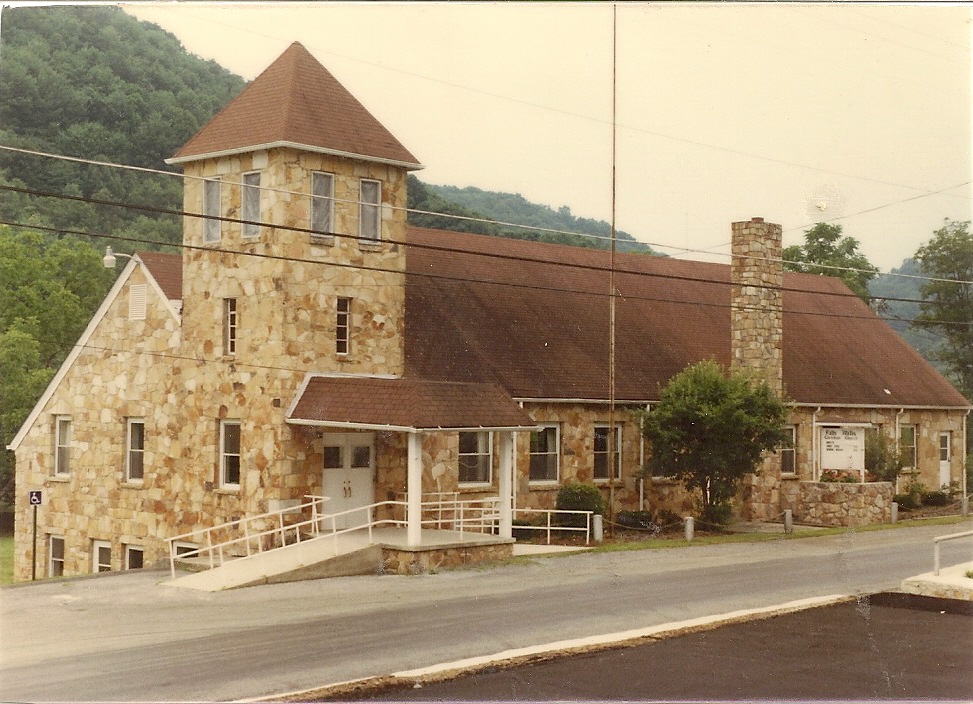
Christian Church on Mudfork Road in Falls Mills, Virginia

On Sundays, the families living along these ridges and within the valleys put on their best clothes. It may be a hand-me-down suit that belonged to Uncle Charlie Davidson or that special print dress with a ruffle that grandmother made. And after church, they all go to relatives houses and eat a home cooked dinner with all the fixings and talk about nothing. They sit around the kitchen table or on the front porch glider and eat dessert and drink coffee. The children play in the yard and climb the weeping willow tree until evening when it’s time to go back to church. These mountain people are serious about God’s example to rest on Sunday. God created them and their mountains; they believe it.

Not so different from the men, women in the mountains of southwest Virginia are also accustomed to hard work. It seems to be their calling in life to raise children and keep the house. The kitchens where Sarah, Mary Jane or Bertha live always smell good from cooking and canning. To avoid being wasteful, the homemaker puts leftovers on a plate over the warm stove. Cold cornbread will likely be eaten later, crumbled in buttermilk. When winter’s weather blankets the summer, Appalachian women gather by the fireplace in the living room to quilt. They embroider family names and special dates on their patchwork quilts. They look at family photographs of expressionless faces hanging on the wall and record births, marriages and deaths in the family Bible. God and family are most important.

In the fall of the year, children climb the colorful mountains painted with autumn leaves, and they run through the woods. They get stained hands from scooping up black walnuts covered in a thick outer husks and prickly fingers from plucking chestnut-like chinquapins from spiny burrs. Winter’s snow encourages the children to ride their sleds for hours on end. There’s no need for costly toys in Appalachia because they love the outdoors and have no expectation of more. They feel safe playing within the protective natural boundary of the mountains, isolated from a world they’ve never seen.

When someone dies, Appalachian people gather at a wake where they view the body and pay their respects. The women cook and take food to feed and comfort, and to show compassion to the grieving family. The men sit alongside each other with tears in their eyes, and they share stories they fondly remember. The funeral procession from the chapel to the cemetery is long and stately and somewhat presidential. Cars line up behind the hearse, following ceremoniously down winding roads to the cemetery. People gather round and the men reverently remove their hats. The minister speaks again, and everyone stays at the graveyard until the body is respectfully at rest in the family plot.

Webster defines Appalachia as the highland region of the eastern United States extending from northern Pennsylvania through northern Alabama, characterized generally by poverty. Literally, this is true. Appalachia is an area of mountains and hollows scattered with dirty, rut roads leading to worn-out wooden shacks and privies. The people work long hours and hard jobs and have little hope for relief. Nevertheless, Appalachia is much more than a region of impoverished mountain people. Appalachia is home to an honorable way of life filled with a wealth of good values, contentment, and appreciation for life. Appalachia is home to God-fearing people who know who they are and what life means – accepting the blessings of a rich heritage and salvation from the Savior.

_______________________________________________________

“I will put enmity between you and the woman, and between your offspring and her offspring; He shall bruise your head and you shall bruise His heel.” Genesis 3:15

From the moment that Adam and Eve rebelled against God, the greatest need the world has had is a Savior. That Savior was promised in the above scripture and Jesus Christ is the fulfillment of that prophecy.

The Storytellers

Attributed to Author Della M. Cumming ca 1943

We are the chosen. My feelings are, in each family there is one who seems called to find the ancestors. To put flesh on their bones and make them live again, to tell the family story and to feel that somehow they know and approve. To me, doing genealogy is not a cold gathering of facts, but instead, breathing life into all those who have gone before. We are the storytellers of the tribe. All tribes have one. We have been called, as it were, by our genes. Those who have gone before cry out to us, “tell our story”. So we do. In finding them, we somehow find ourselves.

How many graves have I stood before now and cried? I have lost count. How many times have I told the ancestors, you have a wonderful family, you would be proud of us? How many times have I walked up to a grave and felt somehow there was love there for me? I cannot say.

It goes beyond documenting facts. It goes to who I am and why I do the things I do? It goes to seeing a cemetery about to be lost forever to weeds and indifference and saying, I can’t let this happen. The bones here are bones of my bone and flesh of my flesh. It goes to doing something about it.

It goes to pride in what our ancestors were able to accomplish. How they contributed to what we are today. It goes to respecting their hardships and losses, their never giving in or giving up, their resoluteness to go on and build a life for their family.

It goes to deep pride that they fought to make and keep us a nation. It goes to a deep and immense understanding that they were doing it for us, that we might be born who we are, that we might remember them. So we do. With love and caring and scribing each fact of their existence, because we are they and they are us. So, as a scribe called, I tell a story of my family. It is up to that one called in the next generation to answer the call and take their place in the long line of family storytellers.

__________________________________________________________________________

Then God said, “Let us make man in our image, after our likeness. And let them have dominion over the fish of the sea and over the birds of the heavens and over the livestock and over all the earth and over every creeping thing that creeps on the earth.” So God created man in His own image, in the image of God He created him; male and female he created them. Genesis 1:26-27

For you formed my inward parts; you knitted me together in my mother’s womb. I praise you, for I am fearfully and wonderfully made. Wonderful are your works; my soul knows it very well. Psalm 139:13-14

Come along while I share our story.

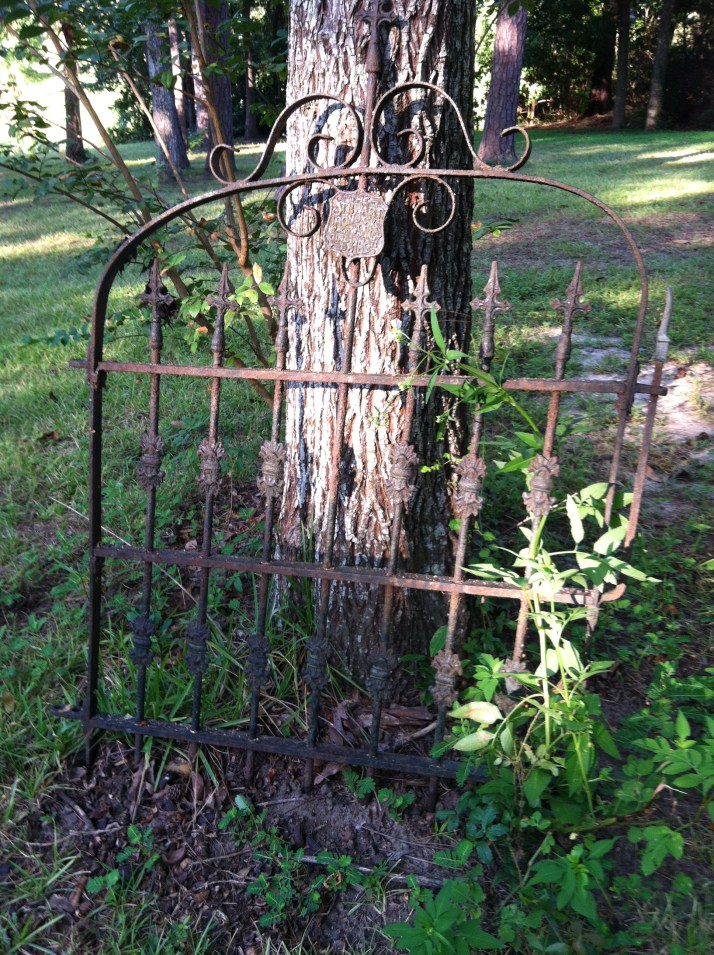
my old wrought iron cemetery fence

If you ask my children about traveling to Mimi’s in the old Volvo station wagon, they would immediately recount the time we brought cemetery fencing and a huge gate back to Florida from Virginia. From my point of view, the 100 year old wrought iron fencing was too wonderful to pass up and, after all, I had a station wagon.

Thank you girls for indulging Mama and being so patient ~

2013-09-11 08.52.07

My little ones were under 10 and every year when we went to Virginia to visit, they usually stretched out in the back of the car for the long 700 mile trek. On this trip back home, we threw blankets over the fencing for padding and hit the road. Yes, I felt slightly guilty about putting my children in that position, but I had to have it!  And – I still enjoy it after all these years.

I must say that one of my favorite adventures acquired from researching ancestors is visiting cemeteries; especially the older ones with their charm and ornate headstones and antique fencing. While visiting the grave of Altha Rudolph Brooks Davis, my maternal grandmother, I noticed by the maintenance shed that the grounds crew had removed the entire fencing and gate from an old cemetery plot. HOW COULD THEY?

When I inquired, I was told that the family wanted the fence removed, and that it would be thrown away.
THROWN AWAY? – I COULD NEVER LET THAT HAPPEN!

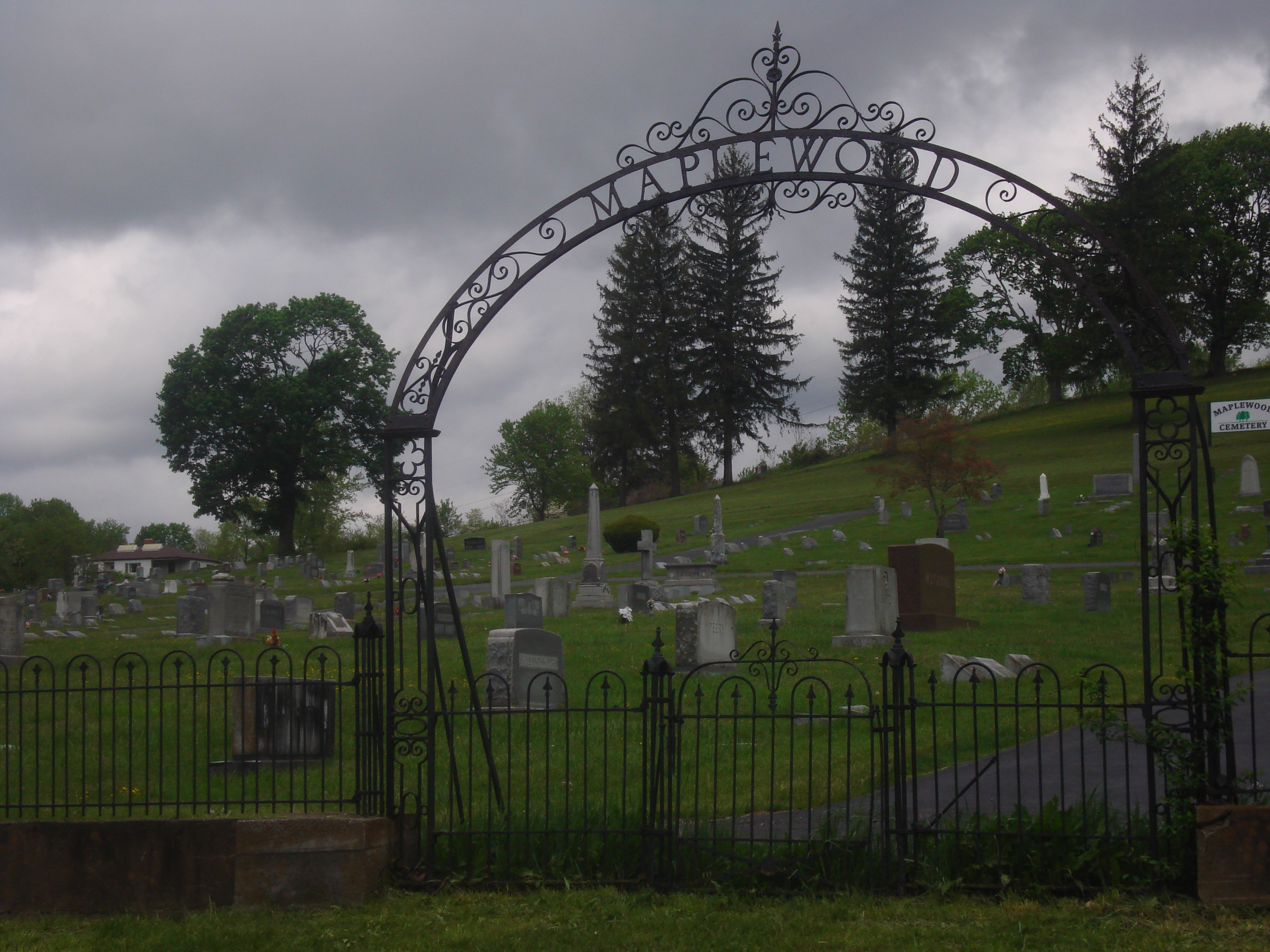
MAPLEWOOD - Davis Altha R. Brooks Grandma Davis 1884-1980  MAPLEWOOD CEMETERY

2013-09-11 08.52.54

For many years the old wrought iron fence had protected a family plot at the Maplewood Cemetery in Tazewell, Virginia. Made by Stewart Iron Works, Cincinnati, Ohio by the Stewart family whose roots were in blacksmithing. The emblem on my gate is difficult to read today due to the corrosion and rust over the years. …but I wouldn’t change a thing about it.

2013-09-11 08.52.25  stewardironworks-old_shield

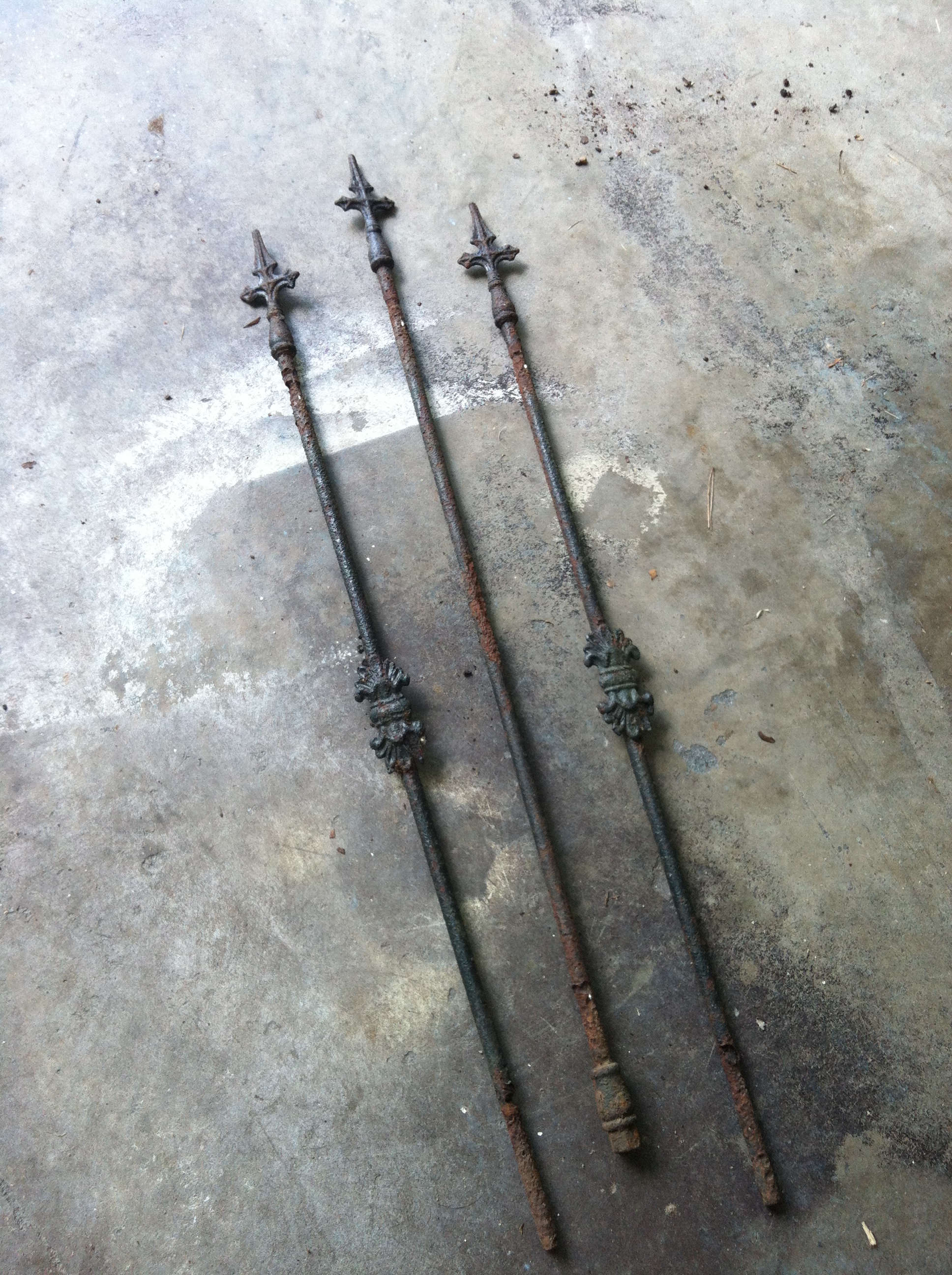
I’ve decided to share my fence at the Sweet South French Country Flea Market on October 19th, 9-4. Yesterday, my husband was kind enough to cut (yes – that kind of gives me the heebie jeebies) one piece of fencing into sections that others may use in their own vintage home or garden. Because I needed a rusty, crusty piece of 3-pickets to hang in my house, I decided to make 7 small pieces available at the market. Two 6-picket pieces at $65 each, two 3-picket pieces at $50 each and 3 single pickets (price to be determined when I figure out how useful they are??).

2013-09-10 11.31.04 2013-09-10 11.31.47 2013-09-10 11.32.41

I can only hope that the new owners of these special pieces will enjoy them half as much as I do. Perhaps I should take applications to determine their new homes. maybe Adopt-a-fence so I can come by and check on them…. just kidding!

What is this blog about?

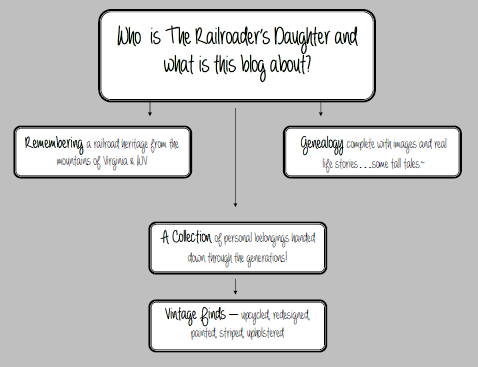
It’s a reasonable question to ask, “Who is The Railroader’s Daughter and WHAT is this blog about? If you’re following this blog, you may wonder why you started following it.

Perhaps, your interest lies in railroads or the old bustling towns of Bluefield, WV and Bluefield, VA, built around the rise of the railroad industry.

On the other hand, you may be my family and you’ve been supportive of my efforts to uncover mounds of genealogy relating to our mountain roots in Russell, Tazewell and Mercer Counties and our relatives who fought to protect their families from the Indians and who were instrumental in establishing county governments and founding towns.

You may be an antique enthusiastic who shares my love of old things, primitive utilitarian items that tell a story of the pioneer ancestors who blazed the trails down through the Shenandoah Valley and into Southwest Virginia.

You may be totally unrelated to any of the above and just like the vintage junk that I drag home and transform into something fun or functional. Whatever the case…..

what is

Evolving over a period of years, The Railroader’s Daughter is an attempt to bring together all the things I’ve learned and loved. You’ll find an array of information, images, family history and surnames as they connect to my roots. There is a page of vintage finds for sale. I also showcase a collection of hand-me-down personal family items that reveal a glimpse into a child growing up in the mountains of southwest Virginia –  a lifestyle I now treasure.

Both of my grandfathers and several great uncles, my father and three of his brothers, one of my brothers and many of our cousins, my husband and I have all worked for the railroad. There have been good times, bad times – stories of coal mines and accidents, floods and survivals, living on the rails and beautifying the railway. It’s a strange way of life to many modern families, but a wonderfully exciting life for those who have experienced the romance of a dining car breakfast with fine linens, a childhood dream of a trip in the Norfolk & Western observation car or the stories of ancestors who moved all their worldly possessions in a boxcar. It’s a plethora of adventure.

I am The Railroader’s Daughter!  I am old enough to have learned a few things and to realize that those who came before me knew a little somethin’ about life. They had it harder than I have it. I appreciate my parents because they cared enough to teach me respect for my elders and how to say, yes ma’am, no sir and thank you. Although I moved away from the beautiful mountains of southwest Virginia when I was only 21,  I well up with pride when I brag about East River Mountain and Ward’s Cove and my roots in Appalachia.

Thanks for visiting, and I hope you’ll come back soon.

“I lift up my eyes to the mountains…”

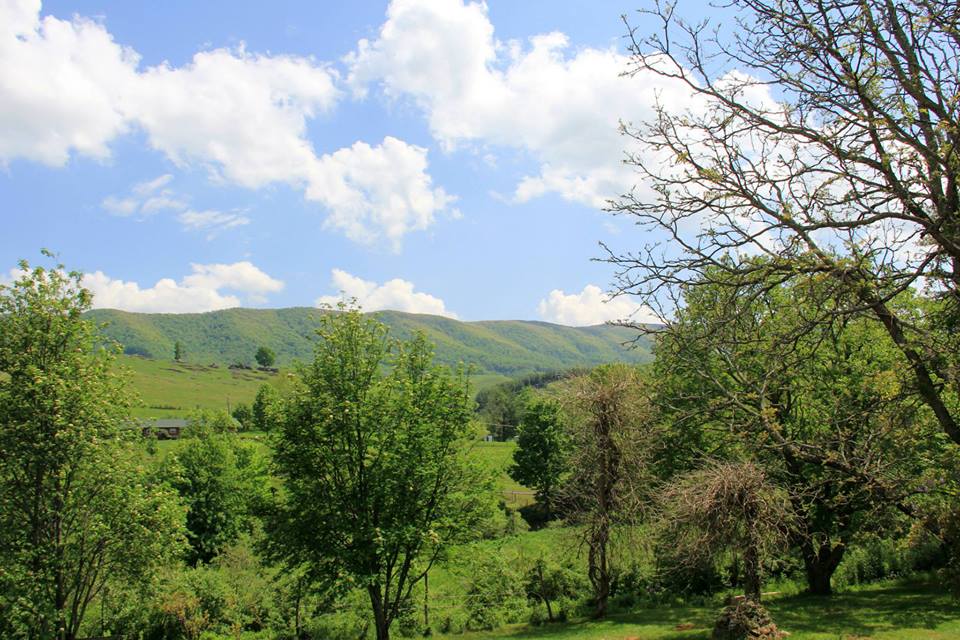
Just down the road from where I grew up, a woman named Jenny lives in the house of her childhood. She is an amazing photographer of birds, flowers, family and of our mountain. Throughout the year she posts pictures of our beautiful East River Mountain on Facebook, and I love to see those images.  Since Mom still lives about 1/4 mile away in a house facing this spectacular sight, I have Jenny’s birds-eye view (even though I’m 700 miles away) and know what the weather is like for Mom that day.
This morning Jenny posted a scripture and a message. I hope it inspires you as much as it did me. Thank you Jenny!
‘I look outside every morning to the same beautiful view my ancestors have seen before me. I say this scripture, that for generations has meant so much to my family,  from Psalm 121:1-2: “I lift up my eyes to the mountains—where does my help come from? My help comes from the Lord, the Maker of heaven and earth.”
This devotion really touched my heart and soul. Thank you Rev. Ray.’
Jenny Parris Akers East River Mountain 2013
The traveler app…roaches a distant mountain and all of it is in view. From a distance one might believe that it is easy to climb. The view is different at the foot of that same mountain. There all thoughts of an easy expedition vanish: it is tall, steep and deep. Step inside it’s forest door and the mountain becomes alive with character of sights, sounds and smell. It’s breeze touches you as though it was breathing an invitation to climb and explore the unsearchable ways of its creator.
The weary travelers of old would look out at the distant road they had to walk to get home. There were mountains and valleys to cross and go through. The trip would be with hot days and dark nights. They would travel together, no one should walk alone. There was no turning back; they would journey forward toward a better land; and they would find strength for the journey in a question and an answer.
The question came as they lifted their eyes to view the hilly path before them: “Where does my help come from?” The answer was (and is) always the same. “My help comes from the Lord who made heaven and earth.” (Psalm 121)
Don’t give up when the way seems impossible. Ask the question and affirm the answer, then keep walking. We get to the top of each mountain by walking with God. The view is always different from the top then it was at the foot. From there you can see where you are going and where you have been. You also see something else: That God is high and lifted up, faithful, and greatly to be praised.
Grace and Peace,   Rev Ray

Rev. Raymond Amos
First United Methodist Church
Elizabethton, TN